Compare onion powder and fresh onion based on cost, shelf life, flavor, storage, convenience, food manufacturing applications, and industrial processing efficiency.
Onion Powder vs Fresh Onion: Cost, Shelf Life & Usage
Onions are one of the most widely used ingredients in global food production. From restaurants and packaged foods to seasoning blends and ready-to-eat meals, onions play a critical role in flavor development across countless food categories.
However, food manufacturers and commercial kitchens often face an important decision: should they use fresh onions or onion powder?
Both ingredients offer unique advantages depending on production scale, storage capacity, product formulation, operational efficiency, and target applications.
This guide compares onion powder and fresh onion across key factors including cost, shelf life, flavor, storage, convenience, processing efficiency, and industrial usage.
What Is Onion Powder?
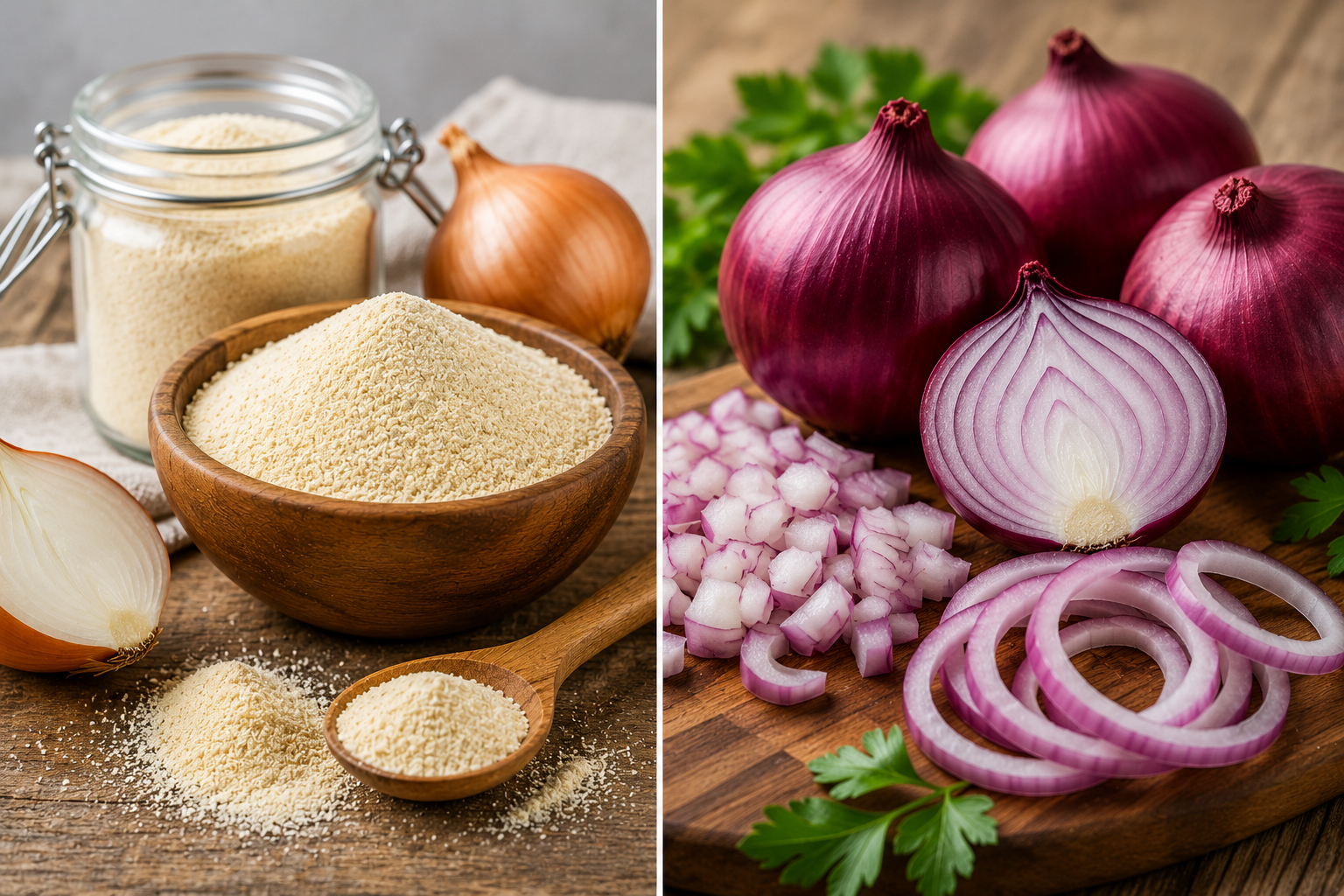
Onion powder is produced by dehydrating fresh onions and grinding them into fine powder. The dehydration process removes most of the moisture while preserving concentrated onion flavor and aroma.
Common Types of Onion Powder
- White onion powder
- Red onion powder
- Toasted onion powder
- Roasted onion powder
- Organic onion powder
Onion powder is widely used in seasoning blends, snacks, sauces, instant foods, meat products, and dry premixes.
What Are Fresh Onions?
Fresh onions are raw whole onions used directly in cooking and food preparation. They are available in multiple varieties including white onions, red onions, yellow onions, sweet onions, and spring onions. Fresh onions are commonly used in restaurants, home cooking, fresh sauces, salads, curries, and foodservice operations.
Cost Comparison
Cost is one of the most important considerations for food businesses. Fresh onion costs include seasonal price fluctuations, transportation costs, storage losses, labor costs for peeling and cutting, high moisture weight, and spoilage during storage. Fresh onion prices can vary significantly depending on weather conditions, harvest cycles, and market availability.
Onion powder cost benefits include stable bulk pricing, reduced transportation weight, long shelf stability, minimal processing waste, and lower labor requirements. Although onion powder may appear more expensive per kilogram, it often becomes more cost-efficient in industrial food production because of lower wastage and reduced operational costs.
Industrial Cost Efficiency
Food manufacturers often prefer onion powder because it helps reduce cold storage requirements, labor-intensive preparation, inventory losses, and supply chain complexity.
Shelf Life Comparison
Shelf Life of Fresh Onions
Fresh onions have limited shelf life and require proper storage conditions. Common storage challenges include moisture exposure, sprouting, rotting, microbial growth, and temperature sensitivity.
Shelf Life of Onion Powder
Onion powder offers significantly longer shelf life when stored properly in moisture-resistant packaging. Storage benefits include low moisture content, reduced spoilage risk, no sprouting issues, simplified inventory management, and easy bulk storage. These advantages make onion powder highly suitable for export markets and industrial food manufacturing.
Flavor and Aroma Comparison
Fresh Onion Flavor Profile
Fresh onions provide natural sweetness, strong pungency, fresh texture, and juicy mouthfeel. The flavor changes depending on cooking method, onion variety, and preparation style.
Onion Powder Flavor Profile
Onion powder provides concentrated onion flavor with excellent consistency. Advantages for food manufacturers include standardized flavor intensity, uniform seasoning distribution, easy blending in dry mixes, and controlled formulation accuracy. For seasoning manufacturers, flavor consistency is a major advantage.
Storage and Handling
Handling Fresh Onions
Fresh onions require ventilated storage, careful temperature management, regular inspection, and higher warehouse space. Improper storage can lead to spoilage and inventory loss.
Handling Onion Powder
Onion powder is easier to store and transport because it occupies less space, has lower moisture content, requires no refrigeration, and works well in bulk packaging systems. This improves operational efficiency for industrial food manufacturers.
Usage in Food Manufacturing
Applications of Fresh Onions
- Restaurant cooking
- Fresh sauces
- Curries
- Salads
- Street food
- Fresh meal preparation
Applications of Onion Powder
- Snack seasonings
- Instant noodles
- Soup premixes
- Ready-to-eat meals
- Sauce premixes
- Processed meat products
- Frozen foods
- Dry rubs and marinades
Onion powder is especially valuable in dry food systems where moisture control is important.
Processing Efficiency
Industrial food production prioritizes speed, scalability, and consistency. Challenges with fresh onions include peeling and cutting labor, moisture variability, inconsistent flavor strength, short shelf life, and waste generation. Advantages of onion powder in processing include easy automation, fast ingredient blending, reduced production downtime, lower preparation costs, and consistent flavor delivery. These advantages are particularly important for large-scale food manufacturing operations.
Nutritional Considerations
Both fresh onions and onion powder contain beneficial plant compounds. Fresh onions provide higher natural moisture, fresh texture, and natural phytonutrients. Onion powder provides concentrated flavor compounds, long-term usability, and convenient industrial application. Nutritional content may vary depending on dehydration method and storage conditions.
Export and Global Trade Advantages
Onion powder is highly preferred in international food trade because of its stability and transportation efficiency. Global buyers prefer onion powder for its long shelf life, lower freight costs, easy warehousing, reduced spoilage risk, and bulk export suitability. These benefits support global sourcing and international food manufacturing.
Food Safety and Quality Standards
Industrial buyers typically source onion powder from certified suppliers holding certifications such as FSSC 22000, ISO 22000, HACCP, BRCGS, Kosher Certification, Halal Certification, and US FDA Registration.
Which Is Better?
When to Use Fresh Onions
- Fresh cooking applications
- Restaurants and foodservice
- Recipes requiring onion texture
- Fresh sauces and salads
When to Use Onion Powder
- Industrial food manufacturing
- Dry seasoning systems
- Ready-to-eat foods
- Export-oriented food production
- Convenience foods
- Long shelf life products
Conclusion
Both onion powder and fresh onions play important roles in modern food production. Fresh onions provide natural texture and fresh flavor, making them ideal for cooking and foodservice applications. Onion powder, however, offers major advantages in shelf life, storage efficiency, scalability, processing convenience, and industrial consistency.
For food manufacturers, seasoning companies, snack producers, and ready-to-eat food brands, onion powder often provides superior operational and commercial advantages.
As global demand for convenience foods and shelf-stable ingredients continues growing, onion powder will remain an essential ingredient across industrial food processing and international food manufacturing.
Gallery

Neeraj Kapoor
Food ingredient analyst and food processing consultant specializing in dehydrated vegetable ingredients, seasoning systems, and industrial food manufacturing.