Learn how garlic powder is manufactured step by step, including raw material selection, cleaning, slicing, dehydration, grinding, quality testing, packaging, and industrial food processing applications.
Garlic Powder Manufacturing Process Explained
Garlic powder is one of the most widely used dehydrated ingredients in the global food industry. Known for its strong flavor, long shelf life, convenience, and versatility, garlic powder is extensively used in seasoning blends, snacks, sauces, instant foods, processed meat products, ready-to-eat meals, and nutraceutical applications.
As global demand for convenient and shelf-stable food ingredients continues to grow, garlic powder manufacturing has evolved into a highly specialized industrial process focused on maintaining flavor quality, microbiological safety, color consistency, and product stability.
This guide explains the complete garlic powder manufacturing process, including raw material selection, dehydration technologies, grinding, quality control, packaging, and industrial applications.
What Is Garlic Powder?
Garlic powder is produced by dehydrating fresh garlic cloves and grinding them into fine powder. It delivers concentrated garlic flavor while offering easier handling, longer shelf life, and improved formulation convenience compared to fresh garlic.
Common Product Forms
- Garlic powder
- Garlic granules
- Garlic flakes
- Toasted garlic powder
- Roasted garlic powder
Importance of Garlic Powder in the Food Industry
Garlic powder is an essential ingredient across multiple food categories because it provides consistent flavor, easy storage, and efficient industrial processing.
Major Industry Applications
- Seasoning blends
- Snack foods
- Instant noodles
- Sauces and dressings
- Frozen foods
- Processed meat products
- Bakery products
- Ready-to-eat meals
- Nutraceutical supplements
Raw Material Selection
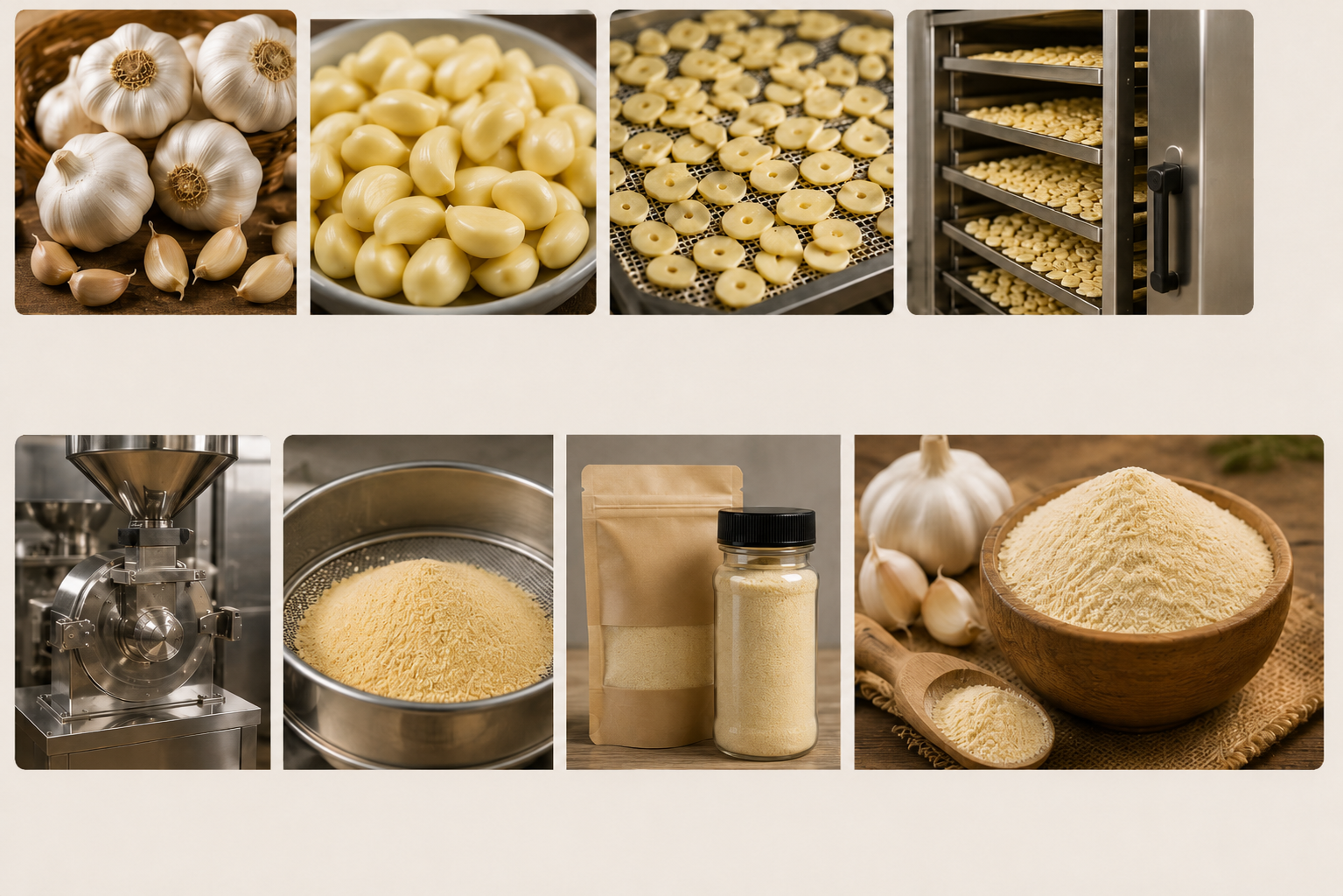
The garlic powder manufacturing process begins with careful raw material selection. Good quality garlic for processing should have fresh and mature bulbs, high solid content, strong aroma profile, uniform bulb size, low microbial contamination, and minimal physical damage. High-quality raw garlic significantly affects the final powder's flavor, color, and shelf life.
Cleaning and Sorting
Fresh garlic bulbs are thoroughly cleaned to remove dirt, dust, roots, stones, and foreign contaminants through washing with clean water, mechanical cleaning, air blowing, sorting and grading, and removal of damaged bulbs. Proper cleaning improves food safety and processing efficiency.
Peeling Process
After cleaning, garlic bulbs are separated into cloves and peeled using manual peeling, mechanical peeling, compressed air peeling, or dry peeling systems. Industrial manufacturers generally prefer automated peeling systems to improve productivity and reduce labor costs.
Slicing and Cutting
Peeled garlic cloves are sliced into thin, uniform pieces before dehydration. Uniform slicing improves drying consistency, reduces moisture variation, prevents uneven dehydration, and improves final powder quality. The thickness of slices directly influences drying time and flavor retention.
Dehydration Process
Dehydration is one of the most critical stages in garlic powder manufacturing. The goal is to reduce moisture content while preserving garlic flavor, color, and quality.
Hot Air Drying
Hot air dehydration is the most widely used commercial method. Garlic slices are placed on drying trays, controlled hot air circulates through the drying chamber, moisture is gradually removed, and dried garlic reaches low moisture levels suitable for grinding.
Vacuum Drying
Vacuum drying helps preserve flavor and color more effectively by reducing drying temperature requirements.
Freeze Drying
Freeze drying is used for premium garlic products because it offers excellent flavor and nutrient retention, however it is significantly more expensive than conventional dehydration.
Cooling and Conditioning
After dehydration, garlic flakes are cooled before grinding. Cooling helps prevent moisture condensation, reduce clumping risk, stabilize product quality, and improve grinding performance.
Grinding and Pulverizing
Dried garlic flakes are ground into powder using industrial pulverizers or grinding systems such as hammer mills, pulverizers, pin mills, and air classifier mills. Different food applications require different particle sizes including fine powder for seasoning blends, coarse granules for snack coatings, and flakes for soup and instant food applications.
Sieving and Standardization
After grinding, garlic powder passes through sieving systems to achieve uniform particle size, improve consistency, enhance product appearance, support industrial formulation accuracy, and improve blending performance.
Quality Control and Testing
Quality assurance is essential throughout the manufacturing process through moisture content analysis, microbiological testing, particle size analysis, color evaluation, flavor strength assessment, heavy metal testing, and pesticide residue analysis. Garlic powder manufacturers must control microbial contamination to meet international food safety standards.
Packaging Process
Proper packaging protects garlic powder from moisture, oxygen, contamination, and flavor loss. Common packaging options include multi-layer laminated bags, food-grade HDPE bags, aluminum foil pouches, fiber drums, and retail seasoning containers. Garlic powder should be stored in cool, dry conditions away from direct sunlight and humidity.
Food Safety Certifications
International buyers often require garlic powder manufacturers to maintain globally recognized food safety certifications including FSSC 22000, ISO 22000, HACCP, BRCGS, Kosher Certification, Halal Certification, and US FDA Registration.
Industrial Applications of Garlic Powder
Seasoning and Snack Industry
Garlic powder is widely used in chips seasoning, snack coatings, masala blends, and instant noodles.
Ready-to-Eat Foods
Applications include frozen meals, soup mixes, sauce premixes, and convenience foods.
Processed Meat Products
Garlic powder enhances flavor in sausages, meat marinades, processed meat snacks, and frozen meat products.
Nutraceutical and Wellness Products
Garlic powder is also used in dietary supplements and wellness formulations.
Advantages of Garlic Powder Over Fresh Garlic
- Longer shelf life
- Convenient storage
- Easy transportation
- Consistent flavor profile
- Reduced processing labor
- Industrial scalability
Future of Garlic Powder Manufacturing
The garlic powder industry continues evolving with increasing focus on clean-label processing, organic garlic powder production, low-temperature dehydration, sustainable manufacturing, improved traceability systems, and advanced food safety technologies. Growing demand for convenience foods and ready-to-use ingredients is expected to drive continued global market growth.
Conclusion
Garlic powder manufacturing is a sophisticated food processing operation involving careful raw material selection, dehydration, grinding, quality control, and packaging.
Modern manufacturers focus on preserving flavor, maintaining food safety, and delivering consistent product quality for global food Agro.
As consumer demand for convenience foods, seasoning blends, and clean-label ingredients continues growing, garlic powder will remain an essential ingredient across food manufacturing, nutraceuticals, and industrial food processing sectors worldwide.
Gallery

Raghav Sharma
Food processing consultant and dehydrated ingredient specialist with expertise in spice processing, industrial dehydration technologies, and food manufacturing systems.